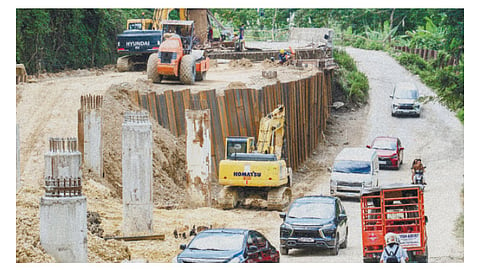


CEBU City Mayor Nestor Archival has warned contractors that delays in infrastructure projects will no longer be tolerated. At a meeting with officials from the Department of Public Works and Highways (DPWH) and contractors on Tuesday, Sept. 9, 2025, he said the city will now strictly enforce the five percent daily penalty rule written into government contracts. He also ordered contractors to finish projects in half the time originally scheduled, or risk sanctions.
WHY IT MATTERS. For many Cebuanos, stalled or abandoned projects have become a familiar nuisance: half-dug drainage canals, roads left unfinished, and a bridge repair in Barangay Malubog that has dragged on for seven years. These disruptions clog traffic, frustrate residents, and feed public suspicion that contractors face little accountability. Archival’s ultimatum aims to change this culture of delay.
THE PENALTY EXPLAINED. Archival said that the penalties are not new rules but provisions contractors themselves agreed to when signing contracts. The formula:
Compute 10 percent of the project’s total cost.
Then apply a five percent daily fine on that amount for every day of delay.
Example: A P1 million project → 10 percent is P100,000 → five percent of that is P5,000 daily penalty.
Archival argues that if the public suffers from delays, contractors must share the burden too.
“If the contract says 100 days, I expect it will be finished in 50. People are already suffering from these half-baked, long-overdue projects. Cebu City residents deserve better,” he said.
NEW REQUIREMENTS. Archival also ordered the contractors to comply with the following:
Signages at sites showing start and completion dates;
Five trained flagmen from the Cebu City Transportation Office to manage traffic;
Workers assigned to clean up debris and keep zones safe.
Permits may be withheld if contractors fail to comply, Archival said.
PROJECTS THAT NEVER END. The unfinished Pung-ol bridge in Malubog is the mayor’s prime example. Begun years ago, it stalled after faulty soil testing. Residents in Banilad, Tisa, and Pardo complain of similar abandoned works. For Archival, these cases show not just poor planning but “a lack of care.”
MONITORING GAP. Archival admitted that City Hall’s own lapses fuel the problem. Project inspections have often been inconsistent or nonexistent. To fix this, he will create a project monitoring office under his authority to serve as a watchdog over compliance.
PUSHBACK. Contractors typically cite bad weather, design flaws, or right-of-way issues for delays. But Archival rejects these as blanket excuses. “Adjustments are part of construction. But dragging on projects endlessly, leaving excavations and open ditches for months that’s negligence. That’s on the contractor, not on the city,” he said.
He also warned that contractors should not compromise quality just to catch up with deadlines.
“There are ways to fast-track without sacrificing durability and safety. What we cannot allow is for them to drag their feet.”
Archival clarified that the penalties and stricter rules apply to all infrastructure works from flood control systems to road projects
WHAT WE DON’T KNOW YET. How aggressively will the city enforce the penalties in practice?
Will contractors contest the fines, possibly leading to legal disputes? Can the new monitoring office consistently inspect projects, given limited manpower?
WHEN ALL’S SAID AND DONE. Archival’s ultimatum reflects widespread frustration over Cebu City’s “never-ending” projects. By enforcing penalty clauses and tightening oversight, he hopes to force a cultural shift among contractors and city engineers. His message: “finish what you start, finish it on time, and finish it properly. The people of Cebu City deserve infrastructure that works, not eyesores that linger for years.” / CAV