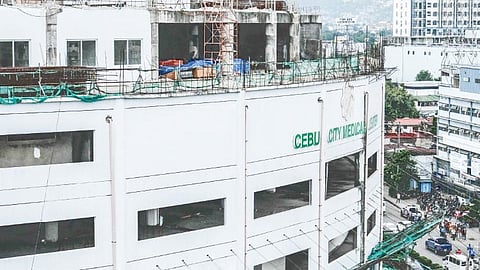


The Commission on Audit revealed that deficiencies in detailed engineering and poor contract management caused a 574-day suspension and delayed five infrastructure projects for the new Cebu City Medical Center, totaling P1.90 billion.
Engineer Brian Pasilan stated during a Sept. 29, 2026, executive session that the hospital's electrical condition is very unsafe due to improper grounding, generator synchronization issues, faulty wiring, and untested systems.
The City Government committed to evaluating all uncompleted hospital contracts for possible lawful termination, completion, or takeover, and the engineering department will adopt stricter detailed-engineering checklists.
DEFICIENCIES in detailed engineering and poor contract management have severely delayed the completion of the new Cebu City Medical Center, leading to uncompleted works and unsafe installations, according to the Commission on Audit.
In its 2025 Annual Audit Report, state auditors revealed that the lack of required technical documents and inadequately justified contract extensions prevented the proper inspection of five infrastructure projects tied to the hospital. These projects represent a combined contract amount of P1.90 billion, with P1.13 billion already spent at the time of the audit.
Missing records and prolonged suspensions
The delays span multiple phases of the hospital’s construction. For the initial phases — which cover interior masonry works and mechanical, electrical, plumbing and fire protection systems on the fifth and sixth floors — the City’s Department of Engineering and Public Works failed to submit vital technical documents.
Without these records, auditors could not complete their technical evaluation. The department attributed the missing files to past calamities, managing only a partial retrieval of the documents so far.
In the third phase, the project stalled for a 574-day suspension without sufficient supporting documentation. State auditors flagged this delay, prompting the City Government to demand formal justifications from its project engineers and to ask the accounting office to assess whether the stoppage resulted in any overpayments to the contractors.
Unsafe installations and incomplete systems
These bureaucratic bottlenecks have translated into tangible safety and structural concerns inside the facility. During a Sept. 29, 2026, executive session of the Cebu City Council, engineer Brian Pasilan presented a technical assessment describing the hospital’s electrical condition as “very unsafe.”
Pasilan identified multiple risks, including improper grounding systems, generator synchronization issues, faulty wiring and questionable fire pump connections. He noted that several installations did not meet specifications and systems remained largely untested and non-functional.
This assessment echoes the audit findings for the project’s fourth phase, where auditors demanded an explanation for why installed systems were left uncommissioned and non-operational and why there were excess materials that were not part of the original bill of quantities.
Evaluating uncompleted contracts
The complications from these earlier phases are now stalling current progress, as unfinished and defective works must be repaired before the succeeding phases can move forward. However, because the City pushed forward with new phases without properly resolving the old ones, accountability for the defects remains unclear.
During the recent council session, Councilor Dave Tumulak pointed out that some earlier contracts had not been properly terminated. He stressed that the City needs to clarify the obligations left by former contractors so that the current builders can proceed without absorbing liability for work outside their original scope.
To address the audit findings and prevent similar delays, the City Government committed to evaluating all uncompleted hospital contracts for possible lawful termination, completion, or takeover. The engineering department is also set to adopt stricter detailed-engineering checklists for future infrastructure procurement, with a target to implement these corrective actions between Aug. 5 and Sept. 5. / CAV