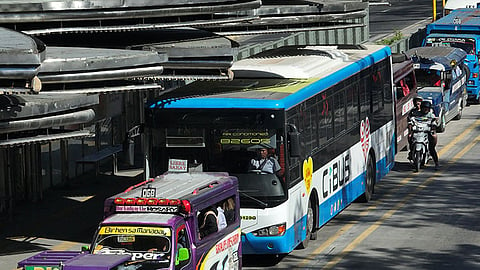


The Commission on Audit flagged the Cebu City Government for leaving P413.71 million unutilized out of P460.26 million released for the Cebu Bus Rapid Transit project since 2017.
State auditors attributed the low utilization rate of 10.11 percent to operational constraints, including undefined timelines, inadequate manpower, and delays in road right-of-way acquisition.
The Cebu City Government committed to implementing four corrective measures, including establishing a validated work program, providing administrative support, and creating an oversight committee.
THE Commission on Audit (COA) flagged the Cebu City Government’s continued failure to fully utilize funds released for the Cebu Bus Rapid Transit (CBRT) project, with P413.7 million remaining unutilized after more than eight years.
In its 2025 Annual Audit Report, COA said the City utilized only P46.55 million, or 10.11 percent, of the P460.26 million released for the project since 2017.
The remaining P413.71 million was left unutilized, which COA said was inconsistent with Sections 4 and 16 of Presidential Decree (PD) 1445, or the Government Auditing Code of the Philippines, and Section 3 of PD 1870.
Operational constraints
COA attributed the low utilization to operational constraints, including the absence of clearly defined timelines, inadequate manpower and delays in implementing key project components.
These issues significantly impeded the implementation of the CBRT project, particularly the acquisition of road right-of-way (ROW) and project sites and delayed the realization of its intended benefits, the state auditor said.
Clear timelines
COA recommended that Mayor Nestor Archival, through the CBRT Project Management Office (PMO), establish and strictly implement clear timelines and milestones for all remaining work items under the approved program of works.
In response, the Cebu City Government committed to adopt a jointly validated CBRT work program with achievable milestones for every outstanding city responsibility.
The CBRT-PMO, Department of Engineering and Public Works, City Planning and Development Office and Department of Transportation (DOTr) are tasked to update the remaining road construction works and site tasks. They must also identify project dependencies and fund utilization, secure management and DOTr concurrence and set the implementation period from September to December 2026.
Administrative support
COA also recommended that the City provide the CBRT-PMO with adequate technical and administrative support, including additional competent personnel, to speed up the ROW and site acquisition process. Acknowledging the finding, the City committed to assess its BRT technical and administrative staffing gaps and provide authorized support.
The mayor, CBRT-PMO, Human Resource Development Office, City Budget Office and City Legal Office are tasked to prepare a workload and skills plan. They will designate responsible personnel and secure the necessary staffing and funding approvals.
Another COA recommendation called for stronger coordination between the CBRT-PMO and the DOTr to promptly resolve issues requiring intervention from the national agency. The City committed to maintain a documented issue-resolution process with the DOTr, including regular coordination meetings and an updated decision and impediment log.
Oversight committee
COA further recommended the creation of an oversight or monitoring committee to regularly evaluate the CBRT project’s progress, timelines and performance and ensure accountability in its implementation.
The City committed to establish an authorized CBRT oversight mechanism that includes independent reviews of project progress and expenditures. The mayor, CBRT-PMO, Local Finance Committee and City Planning and Development Office will be responsible for defining the committee’s composition, mandate, milestones and escalation rules, as well as issuing the appropriate order and requiring periodic performance reports. All four corrective measures were listed as “to be implemented” as of the audit report.
The CBRT is a major public transport project intended to improve mobility along Cebu City’s main transport corridor, but its implementation faces delays involving ROW acquisition, project sites and coordination among the agencies involved. COA’s latest findings put the City’s utilization of the released CBRT funds and its remaining implementation responsibilities under renewed scrutiny as the City works to address the audit recommendations before the end of 2026. / CAV