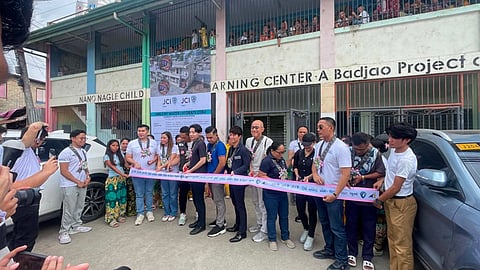


JCI Cebu and JCI Japan launched the “Bohe Maka Sannang” project on June 21, 2026, to provide safe drinking water to 525 Badjao families in Barangay Mambaling, Cebu City.
The project, funded by a 2-million Japanese yen (P752,000) grant, utilizes a Japanese filtration system with ultra-filtration membranes and UV sterilization to treat communal water supplies for 2,000 local residents.
The initiative includes livelihood training in soap and jewelry-making for community members, alongside financial literacy and equipment maintenance instruction, to ensure long-term sustainability and provide supplemental income opportunities.
AROUND 525 Badjao families in Barangay Mambaling, Cebu City will soon have access to safe, clean drinking water. A new project launched by Junior Chamber International (JCI) Cebu and JCI Japan aims to solve long-standing sanitation and health issues in the community.
The project is called “Bohe Maka Sannang,” which translates to "Water is Life." It officially launched on June 21, 2026, at the Nano Nagle Learning Center in the Badjao community in Alaska, Mambaling.
The initiative is funded by a 2-million Japanese yen grant (about P752,000) through JCI Japan’s SMILE by Water initiative under the JCI RISE program for underserved communities.
The heart of the project is a modern Japanese water filtration system. This system will treat water from the community’s current supplies, including tap connections, communal sources, and even rainwater.
Here is how the filtration system works:
Raw water is pumped directly into a treatment unit.
The water passes through an ultra-filtration membrane to remove sediments and bacteria.
It undergoes UV sterilization to eliminate viruses and other contaminants.
Finally, the purified water is stored in clean stainless-steel tanks, ready for residents to use.
JCI Cebu explained that the new facility is designed to provide a stable supply of safe drinking water for families and students in Mambaling, where official assessments showed urgent needs.
Unsafe water causes severe health problems, especially for young children. JCI Japan vice chair Kotaro Mizuyama said the project aims to address these health issues directly.
Beyond clean water, the initiative also brings new ways for families to earn a living. The project includes livelihood programs such as soap-making for women and jewelry-making for children.
About 20 women will receive this special livelihood training. In total, the water system is expected to benefit around 2,000 local residents. To make sure the project succeeds long-term, the community has already received financial literacy and basic equipment maintenance training.
Organizers said that the project will be carefully monitored before it is fully turned over to the community for shared management. By giving the residents the tools to run the facility themselves, the project leaders hope to improve access to clean water, reduce illness, and create sustainable income opportunities for the Badjao families for years to come. CAV