

* Edcom 2 data shows 31,600 early-grade students (11.3 percent) in Cebu Province finished School Year 2025-2026 as struggling readers, with only 26 percent assessed as grade-level ready.
* Early childhood stunting from malnutrition affects 25,000 children under five in Cebu Province, causing irreversible cognitive damage that contributes directly to these foundational reading difficulties.
* The National Education Plan 2026-2035 targets raising early learner grade-readiness to 75 percent by 2028, requiring Cebu to implement targeted school interventions and scale up local resources.
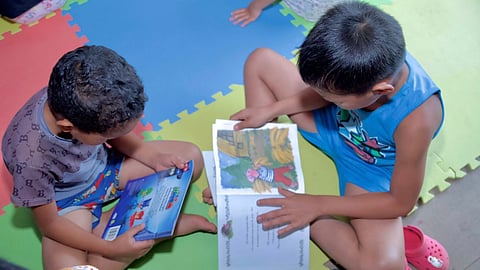
MORE than 31,600 young students in Cebu Province finished School Year 2025-2026 without the reading skills expected for their age.
The Second Congressional Commission on Education (Edcom 2) presented these findings in early October, highlighting a significant educational hurdle. The data, drawn from the Department of Education’s Comprehensive Rapid Literacy Assessment, evaluated learners in Grades 1 to 3, also known as Key Stage 1.
The assessment categorizes students into five levels of reading proficiency. Children placed in the bottom two categories — Low Emerging and High Emerging — are classified as struggling readers. In Cebu Province, these struggling readers account for 11.3 percent of assessed early-grade learners.
When looking at the Schools Division Office of Cebu alone, around 13,300 learners, or 11 percent, fall into the struggling category. While this rate is only slightly above the national average of 10 percent, the sheer volume of students makes it the third-highest number among all school divisions nationwide.
Conversely, only 26 percent of early learners in the province were assessed as ready for their grade level. This falls well below the national baseline of 47.74 percent recorded in the previous school year.
The reading difficulties are not spread evenly across the province. Local government units such as Talisay face the steepest challenges with a struggling reader rate of 22.5 percent. Balamban and Liloan follow at 17.6 percent each, while Consolacion sits at 16.2 percent.
Roots in early childhood nutrition
The foundation of these reading challenges often begins before a child ever sets foot in a classroom. Edcom 2 points to early childhood health, specifically malnutrition, as a primary driver of poor educational outcomes.
According to a 2025 report from the National Nutrition Council, about 25,000 children under the age of five in Cebu Province are stunted.
Stunting does more than affect physical growth; it impairs cognitive development. Research indicates that cognitive damage caused by stunting after a child reaches 24 months of age cannot be reversed. This early setback makes stunted children 16 percent more likely to fail a grade later in life.
Educational advocates emphasize the urgency of addressing these foundational gaps early. Reading difficulties that remain unresolved before a child reaches the fourth grade tend to widen significantly in later years. This progression often leads to junior and senior high school students lacking the fundamental comprehension skills required to tackle more advanced subjects.
Ambitious targets for intervention
To reverse these trends, the National Government has set steep goals through the National Education Plan 2026-2035. The immediate target is to increase the share of grade-level-ready early learners from the previous baseline to 75 percent by 2028.
For Cebu to align with this benchmark, the province would need to improve its current 26 percent readiness rate by 49 percentage points within roughly two years. Edcom 2 officials acknowledge this is a massive undertaking, but stress that a clear numerical goal is necessary to align resources and monitor progress effectively.
“If these are our national targets, what targets will Cebu as a province set in terms of reducing stunting, improving access to early childhood education and also addressing illiteracy at Grade 3? Is it improving by five or 10 percent? Whichever the number is, it is important to quantify so that we know how much effort and resources we all need to bring together, to ensure that no Cebuano child is left behind,” said Edcom 2 executive director Dr. Karol Mark Yee.
Scaling up resources and tracking progress
Closing the educational gap requires a simultaneous push on two fronts: prevention and remediation. Better nutrition and early childhood care ensure that incoming students are ready to learn, while targeted reading programs support those already falling behind in school.
The commission highlighted the Department of Education’s Accelerated Reading and Learning Program as a promising tool for in-school intervention. However, scaling such programs demands an adequate supply of trained teachers and tutors, dedicated time for reading practice, appropriate materials and a reliable system for identifying students who need extra support.
To help local leaders monitor these efforts, Edcom 2 maintains an Early Childhood Dashboard that tracks literacy, nutrition and access to child development centers down to the barangay and school levels.
With these tracking tools and a collaborative effort across sectors, officials note that the province has the infrastructure needed to begin turning the tide.
“With many universities in Cebu, the active engagement of civil society organizations such as Rafi and the determination of the local government, I am sure that Cebu can make significant progress in education and nutrition in the years ahead,” Yee added.