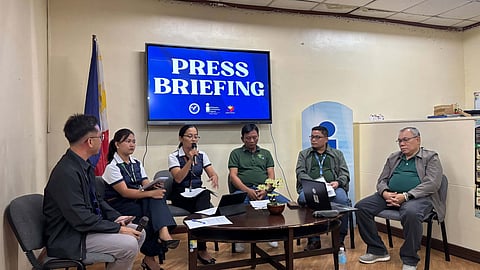


AGRICULTURAL and water resource management agencies in Central Visayas are strengthening preparations for the anticipated impacts of El Niño, including drought, declining water supplies and agricultural losses.
During a press briefing at the Philippine Information Agency on Tuesday, October 20, 2026, officials from the National Irrigation Administration Region 7 (NIA-7), Department of Agriculture Region 7 (DA-7) and Bureau of Fisheries and Aquatic Resources Region 7 (BFAR-7) outlined measures to protect farmers, fisherfolk and regional food security.
NIA-7 officials said below-normal rainfall has reduced water storage in regional dams, limiting the supply available for irrigation.
Public Relations Officer Zarline S. Sambas said the agency is coordinating with irrigators’ associations to manage water distribution.
Section chief Maria Donesa A. Autida said NIA is also identifying vulnerable areas and coordinating with the Department of Social Welfare and Development and the Department of Labor and Employment to provide livelihood assistance to affected communities.
Meanwhile, DA-7 Field Operations Division chief Gerry S. Avila reported more than P222 million in agricultural losses affecting around 4,246 hectares and approximately 4,000 farmers.
The agency is mobilizing its Quick Response Fund and urging local agricultural offices to expedite damage assessments. It is also planning two rounds of cloud seeding totaling around 62 hours, potentially beginning in late October or November.
BFAR-7 officials, meanwhile, said they are preparing a regional disaster risk reduction and management mechanism to monitor fisheries and aquatic resources.
Planned measures include fuel subsidies for capture fishers, adjustments to fishing schedules, and monitoring of water temperature, salinity and pH levels in aquaculture areas.
BFAR-7 also highlighted programs supporting inland fisheries, mariculture, fiberglass boat and fishing gear distribution, and environmentally friendly aquaculture initiatives.
The agencies said they would continue coordinating with local governments, private stakeholders and community associations to minimize production losses, manage water scarcity and protect the livelihoods of farmers and fisherfolk amid the anticipated El Niño conditions. (ABC)