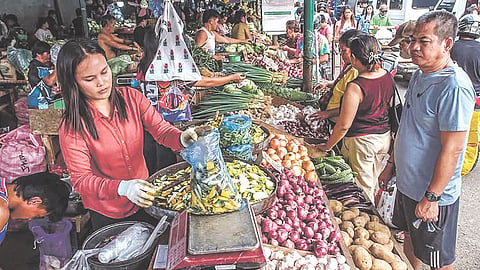


INFLATION in Central Visayas slightly rose to 8.3 percent in September from eight percent in August, remaining significantly above the national rate as price pressures intensified across several major commodity groups, according to the Philippine Statistics Authority (PSA).
The region’s inflation rate was 1.1 percentage points higher than the 7.2 percent national rate and was the sixth-highest among regions.
Food and non-alcoholic beverages, which account for a large share of household spending, posted 8.9 percent inflation, up from 8.5 percent in August.
Restaurant and accommodation services also recorded faster price increases, with inflation rising to 11.2 percent from 10.3 percent, pointing to continued cost pressures for consumer-facing businesses and their customers.
Inflation in furnishings and household equipment accelerated to 7.4 percent from 6.6 percent, while health inflation edged up to 4.4 percent from 4.3 percent.
Transport remained a major source of price pressure, although inflation eased to 15.5 percent from 16.2 percent.
Inflation in housing, water, electricity, gas and other fuels also eased slightly to 7.1 percent from 7.2 percent in August.
Among regions, the Bangsamoro Autonomous Region in Muslim Mindanao posted the highest inflation at 9.7 percent, followed by Western Visayas at 9.2 percent, Caraga at nine percent, Davao Region at 8.7 percent and Bicol Region at 8.6 percent.
National inflation
Nationwide, headline inflation accelerated to 7.2 percent in September from 6.1 percent in August, driven mainly by faster increases in food and non-alcoholic beverages, housing and utilities and transport.
“September’s inflation rise was driven mainly by disruptions in food supply caused by adverse weather and higher global oil prices,” Department of Economy, Planning and Development Secretary Arsenio Balisacan said in a statement.
National food inflation accelerated to 6.8 percent from 4.6 percent in August. Rice inflation rose to 20.3 percent from 19.4 percent, amid tighter domestic supply and higher transportation costs. Vegetable and other food prices also increased faster as weather disturbances disrupted supply, while renewed concerns over African swine fever (ASF) contributed to higher meat prices.
Transport inflation rose to 14.6 percent, while inflation in housing, water, electricity, gas and other fuels accelerated to 8.4 percent.
Core inflation, which excludes volatile food and energy items, picked up to 4.7 percent from 4.1 percent. Inflation for households in the bottom 30 percent income group likewise accelerated to nine percent from 8.2 percent.
The January-to-September average inflation rate stood at 5.4 percent, above the government’s three percent full-year target and the upper end of its two to four percent target range.
Government interventions
The government has suspended excise taxes on liquefied petroleum gas and kerosene, expanded the Secondary Price Cap to the Visayas and Mindanao power grids and is pursuing toll waivers for agricultural haulers to reduce logistics costs.
It is also expanding palay storage, rolling out the country’s first commercially approved ASF vaccine and strengthening agriculture and weather data sharing to improve climate resilience.
Ahead of a possible intensification of El Niño, the government is accelerating procurement of agricultural inputs, expanding food and cold storage, conducting cloud seeding in drought-affected areas and providing targeted assistance to vulnerable communities.
“The best response to supply-driven inflation is to strengthen supply itself,” Balisacan said. / KOC