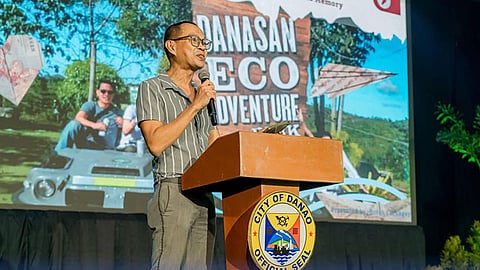


DANAO CITY should connect its cultural heritage, industrial sites and local attractions into cohesive visitor experiences to encourage travelers to stop, explore and spend in the city, according to a design industry leader.
Gil Zaire “Butch” Carungay, a private sector representative to the Design Advisory Council of the Department of Trade and Industry’s Design Center of the Philippines, said Danao could build on its existing assets to develop tourism opportunities that generate economic value for local communities.
“The challenge is not necessarily to attract an entirely new audience. It is to give the people already on the road a compelling reason to stop,” Carungay said in a talk on experiential design during the Danao City Tourism Summit 2026.
Danao is a natural stop for travelers heading north from Cebu City, with connections to other destinations in northern Cebu and the Camotes Islands. However, its attractions risk remaining disconnected from one another without a unified visitor experience, he said.
Among the city’s assets are its heritage sites, Karansa Festival, waterfront areas, commercial centers and natural attractions farther inland.
“An asset by itself is not automatically an experience,” Carungay said, stressing the need to connect these attractions through a cohesive narrative that allows visitors to discover local food, history and culture.
Repurpose old warehouses
He also cited the potential of old warehouses near the cement factory, suggesting that some could eventually be repurposed into maker studios, food halls, exhibition spaces, music and arts venues, design shops or evening markets.
He pointed to Telliskivi Creative City in Estonia, a former industrial complex transformed into a hub for creative businesses, food, art, events and nightlife, as an example of how industrial heritage can be adapted for contemporary use.
Danao need not replicate other creative districts, he said, but should identify opportunities rooted in its own character and resources.
Carungay emphasized that tourism development must also benefit residents, including local makers, cooks, entrepreneurs, artists and storytellers.
“Culture must not become mere scenery for visitors,” he said, adding that tourism experiences should create genuine livelihood opportunities for Danao residents rather than merely provide photogenic attractions.
He recommended starting with a single visitor journey, testing the concept, gathering feedback from residents and tourists, and expanding initiatives that work.
The goal, he said, is to make Danao not just a place people pass through, but somewhere they choose to pause, participate and return to with stories worth sharing. / KOC