

Main Development: Public utility vehicle drivers in Cebu face long fuel station queues and express deep concern over the National Government's uneven fuel subsidy distribution amidst fluctuating energy prices.
Accountability/Conflict: Jeepney driver Ronaldo Ramos reported that many drivers missed out on promised P5,000 and P1,500 assistances, while gasoline-powered driver Steve Tangub slammed their sector's total exclusion from the program.
Public Impact & Data: Excluded gasoline drivers must absorb peak costs of nearly P74 per liter entirely out of pocket, severely squeezing household budgets ahead of upcoming school openings.
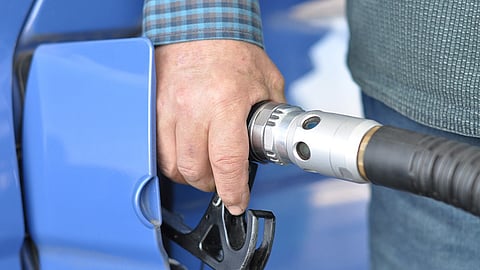
LONG queues at fuel stations have become a painful daily reality for public utility vehicle drivers in Cebu. Already struggling to make a living, many drivers are now raising serious concerns over the uneven distribution of the National Government's fuel subsidies and the heavy financial strain on their households.
While some drivers receive partial assistance, many others say they have been completely left out of the program, making it nearly impossible to keep up with fluctuating fuel costs.
Ronaldo Ramos, a traditional jeepney driver, is deeply frustrated by the systemic gaps in how the fuel subsidy program is distributed. Speaking at a Flying V gas station in Mandaue City, where his vehicle is registered under the subsidy program, Ramos explained that the rollout of fuel assistance has been highly uneven.
"Many of us drivers did not receive the promised P5,000 assistance, nor were we included in the additional P1,500 list," Ramos said. "We have no choice but to endure this and keep moving forward because we cannot afford to stop working."
Ramos currently receives a P10-per-liter fuel discount at the pump, which is tracked through a running balance on his receipts. However, he noted that weekly Monday cutoffs create additional challenges, forcing drivers to match their fuel purchases with highly unpredictable daily incomes.
"If we do not drive, our families will starve," Ramos explained in Cebuano. "With classes starting soon, we desperately need money to buy school supplies and meet the requirements for our children. The passenger numbers are low, and when fuel costs eat up most of what we take in, there is barely anything left to bring home."
While diesel drivers face administrative delays, gasoline-powered public transport operators face an even harsher reality: they are completely excluded from the station-level subsidy program.
Steve Tangub, who drives a rented gasoline-powered public utility vehicle, pointed out the glaring inequity in the government's current relief framework. He noted that the program heavily favors diesel lines while ignoring the sharp price spikes hitting gasoline users.
"Diesel drivers were able to avail of the P10 discount, but there is absolutely nothing for us because we use gasoline," Tangub said. He noted that gasoline prices in the area had previously surged to nearly 74 pesos per liter. "We are heavily affected by these prices because gasoline is incredibly expensive, yet our sector was completely excluded from the fuel subsidy program."
Tangub explained that while diesel prices have also risen significantly—reaching up to P55 per liter at their peak—gasoline drivers have had to absorb their much higher fuel costs entirely out of pocket without any safety net.
Because of the high cost of fuel, drivers have to hunt for any discount they can find to stay afloat.
"Whenever prices drop even a little bit, this specific station becomes incredibly crowded and the lines get very long because it is known as the cheapest option in Mandaue," Tangub said. "It offers a bit of an advantage, but passenger volumes are still low right now. We can only hope that things improve once classes are fully underway."
Both drivers fear for their long-term livelihood, noting that brief fuel price declines offer little protection against ongoing uncertainty in global energy markets. As costs continue to pressure household budgets, public utility drivers are left hoping for a fairer government safety net that supports the entire transport sector.ABC