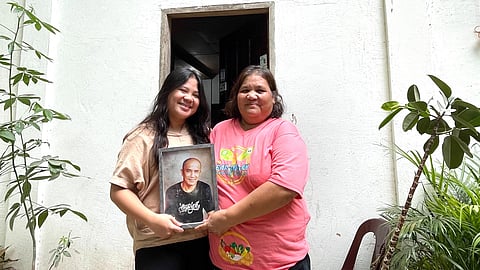


A FISHERMAN’S daughter from Badian, Cebu, who once had to stop college for a year to secure a scholarship, has emerged as one of the country’s top new fisheries professionals.
Janna Ejurango Taboada, 23, a graduate of Cebu Technological University (CTU)-Moalboal, ranked sixth in the October 2026 Fisheries Professionals Licensure Examination.
Her achievement was a milestone for her family, which struggled financially to keep all three children in school, and for CTU-Moalboal’s Fisheries department, which she said had produced its first topnotcher.
But for Taboada, the accomplishment also carried a personal meaning: it was something she wished she could have shared with her late father, Jose Manalili Taboada, a fisherman who died on Sept. 18, 2022.
“Sayang pa, ikaw unta to ang magtudlo nako’g tahi og pokot pa” (It’s sad, Pa. You were supposed to be the one to teach me how to weave fishing nets), Taboada said, expressing her longing for the father she had hoped would teach her how to mend fishing nets.
Her father’s work as a fisherman was also part of the reason, she was able to pursue her studies, as she qualified for a scholarship from the Bureau of Fisheries and Aquatic Resources for children of fisherfolk.
A year pause
Taboada did not initially plan to take up Fisheries. She had wanted to study education, partly influenced by her sister who became a teacher.
When she did not get into her preferred program, she eventually pursued Fisheries. But her college journey was further delayed when the result of her scholarship application came after classes had already started.
Crossed between continuing studies or keeping her scholarship, she had to stop schooling for a semester, resulting in a year-long delay in her studies.
Taboada explained that the BFAR scholarship was intended to be applied for during senior high school. However, her application came at a stage when she had already started college, and the scholarship results arrived after classes had begun.
The interruption was difficult, but it changed how she approached school when she returned. Taboada said she became more serious about her studies, realizing the importance of making the most of the opportunity to finish college.
Her mother, Arsenia Ejurango Taboada, 53, however, encouraged her to take the opportunity.
“Para na sa imong future (For your future),” her mother told her.
When Janna returned to college, she decided to make the year-long pause worth it.
“Dapat maningkamot kog maayo para ma-worth it sad akong pag-undang sa eskwelahan (I have to work hard to make sure that giving up a year of school will be worth it),” she recalled.
Her family’s financial situation made the scholarship particularly important. Her mother, Arsenia, worked as a barangay nutrition scholar, earning about P1,800 a month. At one point, all three children were attending college, placing additional pressure on the family’s limited income.
Beyond studying fish
Fisheries was not Taboada’s first choice, but she eventually learned that the field offered far more than what many people assumed.
“Morag sign ni Lord nga dapat diri ka dapit, dili ka didto, dapat diri ka” (It seems like a sign from the Lord that this is where you should be, not there but here), she said, reflecting on how she came to accept the course.
She said people often associate Fisheries with simply studying fish. However, the program covers a wide range of subjects, including chemistry, zoology, capture fisheries, aquaculture and aquatic ecology.
The course also examines how aquatic resources are managed, how fish are raised and caught, and how fish products are handled after harvest.
For Taboada, the experience helped her appreciate the connection between marine resources and the people who depend on them for their livelihood. She also came to understand the importance of balancing the protection of aquatic ecosystems with the needs of fishing communities.
Her own family background gave these lessons a personal dimension. Growing up with a fisherman for a father, she knew that fishing was not simply a subject in a classroom but a livelihood that sustained families.
First topnotcher
Taboada began preparing for the licensure examination through an online mentorship program in February, months before the October examination.
She chose the program after learning that one of its mentors had topped the examination. Unlike a conventional review center focused mainly on board exam preparation, the program also exposed students to professional practice and the mentors’ experiences in the field.
During her application, she wrote that she wanted to become the first topnotcher from CTU-Moalboal’s Fisheries department.
“Ganahan ko ako’y mauna og top sa amuang department” (I want to be the first topnotcher from our department), she recalled writing.
The mentorship program included a pre-test covering four subjects, followed by discussions that encouraged students to understand the material and explain why certain concepts or processes worked.
Taboada said Fisheries required more than memorizing information. Students had to understand the science behind concepts and processes, particularly how things worked, rather than rely on guesswork when answering questions.
This approach was different from how she had studied before college, when she could often understand lessons simply by listening in class. As she adjusted to the demands of Fisheries, she learned to take notes, review lessons more thoroughly and study consistently.
She also drew motivation from her year-long interruption, determined to prove that the time away from school had not been wasted.
As the examination approached, her goal became more than a personal challenge. She wanted to show her family that their sacrifices had paid off and inspire younger students from her department.
A father’s lesson
Taboada’s connection to Fisheries was also tied to the memories she carried of her father.
Although he had made a living from fishing, he died before he could teach her one practical skill she had hoped to learn from him, weaving and mending fishing nets.
“Sayang pa, ikaw unta to ang magtudlo nako’g tahi og pokot pa” (It’s sad, Pa. You were supposed to be the one to teach me how to mend fishing nets), Taboada said.
The remark reflected her longing for her father, whose livelihood had helped shape her own path into the field.
His absence made her achievement bittersweet. While she had reached a milestone in the profession connected to his work, she could no longer turn to him to learn the craft firsthand or share the news of her success.
Mother, sister’s sacrifices
Behind Taboada’s achievement was her mother’s and older sister’s determination to keep her in school despite the family’s financial difficulties.
Her mother, Arsenia, worked as a barangay nutrition scholar, earning about P1,800 a month. With three children attending college at one point, the family relied on borrowing to cover their needs.
Her older sister, who works as a teacher also helped provide for Taboada’s schooling, often making sacrifices to ensure she had what she needed to continue her education.
The financial burden continued as Taboada prepared for the licensure examination. Her mother borrowed around P9,000 for her review and mentorship program, reminding her of how much the family had sacrificed for her.
“Dako kay mi’g gi-utang para nimo” (We went into a lot of debt for you), Taboada recalled her mother telling her.
The sacrifices became a source of motivation for Taboada, who wanted to make both her mother and sister proud.
“Ganahan ko motop, ’di lang sa akong kaugalingon, pero para sa akong Ate, sa akong Mama” (I wanted to top the exam, not just for myself, but for my older sister and my mother), she said.
Her sixth-place finish in the October 2026 Fisheries Professionals Licensure Examination became a milestone for the family that had helped her pursue her degree despite financial hardship.
Looking back, Taboada said she had learned to appreciate the path that led her to Fisheries. What began as an alternative after she failed to enter her preferred program eventually became a field she could see herself pursuing professionally.
She hopes to gain field experience and is open to working with BFAR, the agency whose scholarship helped her finish college.
Though her father was no longer around to witness her graduation or teach her how to mend fishing nets, Taboada continues to carry his memory as she moves forward in the profession she has chosen. (CDF)
