

Cebu City Department of Veterinary Medicine and Fisheries head Jessica Maribojoc stated that Cebu Province has sufficient general pork supply and expects no holiday shortage despite African swine fever cases in Barangay Toong.
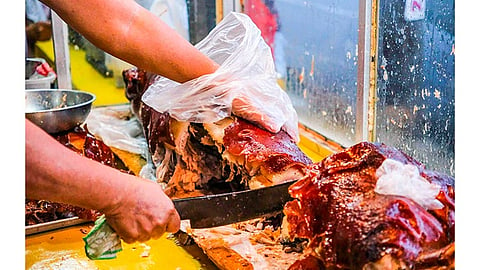
The city's primary challenge is a narrow supply gap for lechon-size pigs normally sourced from the Negros Island Region, where entry remains restricted due to active ASF regulations.
In Barangay Toong, 14 pigs have died and 57 are being culled for containment, while authorities investigate potential transmission routes such as shared slaughter equipment and movement from stockyards linked to Negros.
CEBU City isn’t bracing for a pork shortage this holiday season, even with African swine fever (ASF) cases surfacing in some upland communities. The real concern is narrower: a supply gap for lechon-size pigs, many of which normally come from the Negros Island Region (NIR), where entry of live hogs, pork, and pork products remains restricted due to ASF in that region.
Enough pork, few lechon pigs
Cebu City Department of Veterinary Medicine and Fisheries (DVMF) head Jessica Maribojoc said Cebu Province still produces enough hogs to cover the city’s general pork requirements, with no significant effect on supply or prices recorded so far.
She noted that if supply routes are disrupted, the city’s experience in 2023 suggests traders typically pivot to alternative sources when that happens, easing the impact.
Rolando Tambago, vice chairman of the Pork Producers Federation of the Philippines, said Cebu currently has a surplus of “kilo-kilo,” or slaughter, pigs, with supply expected to remain sufficient through the first quarter of 2027.
The shortfall is specific to lechon-size pigs of a particular breed and size — a gap in Cebu’s P20-billion hog industry, which includes a large lechon market that depends on pigs meeting those exact specifications. Traders fill that gap by sourcing from Negros, independent of any shortage in the general meat market.
The ASF outbreak itself is concentrated in the upland communities, particularly Barangay Toong, where 14 pigs have died and 57 are currently being culled as part of containment efforts.
For now, the city’s overall pork supply remains adequate, and no citywide pork shortage has been recorded. The DVMF’s immediate priority is identifying infected animals, restricting their movement, and preventing the virus from spreading beyond the affected communities.
The Toong infection
The 14 reported deaths involved pigs belonging to two owners in Toong. Maribojoc said the pigs had been dying gradually, prompting the DVMF to collect samples on Sept. 4 and 10. More pigs died after the initial samples were collected, bringing the reported mortality to 14.
Maribojoc cautioned against using the death count alone to gauge the city’s ASF situation — for official reporting, the DVMF’s basis is the number of laboratory-confirmed positive areas. The City Government is also checking hogs within a 500-meter radius of affected areas through blood collection and surveillance.
Although the latest reported deaths were in Toong, the City has included neighboring Buhisan and Pamutan in its containment measures because of their proximity and connection to the affected area.
Maribojoc said Buhisan previously had about 10 hog raisers, but the latest monitoring showed the area no longer had pigs — some had died, while others had been sold or slaughtered. Pamutan had no initially reported mortality or morbidity but was treated as a hotspot because of its proximity to the suspected affected area.
Why testing matters
One challenge facing authorities is the reluctance of some backyard raisers to allow blood collection. Maribojoc said some raisers fear their pigs will automatically be killed if they test positive. The DVMF has conducted information campaigns on testing, biosecurity, and livestock insurance, but some raisers have still declined to participate.
Maribojoc said early reporting and testing are important because they help authorities identify infected animals, restrict movement, and contain the virus. Testing can also provide documentation needed for insurance or government assistance.
Tracing the source
The DVMF is still investigating the possible transmission routes. Authorities are looking into the movement of people, pigs, and pork, as well as possible contamination from slaughtering activities and equipment.
Maribojoc cited an instance in which pigs were slaughtered in Toong and meat was shared with people in nearby communities; authorities are considering whether contaminated knives or other equipment used during slaughter could have mechanically carried the virus.
The DVMF is also tracing a pig that became sick and was reportedly sourced from a stockyard whose supply was linked to Negros. Maribojoc stressed these remain possible transmission routes under investigation and have not been established as the confirmed source of the outbreak.
Support for affected raisers
Maribojoc said affected hog raisers may qualify for indemnification through government programs, with rates set at P4,000 per head for weanlings, P8,000 per head for growers, P12,000 for breeders, and P12,000 per head for finishers intended for slaughter.
The City is also providing alternative livelihood assistance — Maribojoc said the City may provide around 100 to 200 layer chicks, depending on the intervention, intended to eventually produce eggs that raisers can consume or sell. The City has previously provided other livelihood assistance, including piglets and poultry, to affected communities.
Managing the culling
The DVMF coordinates the culling process, while City disaster personnel handle burial or disposal with assistance from other City offices. Owners are discouraged from independently disposing of infected or suspected pigs, because people handling infected carcasses could potentially carry the virus to other farms through contaminated clothing, equipment, or other materials. The City is therefore coordinating the culling and disposal process while applying biosecurity measures throughout.