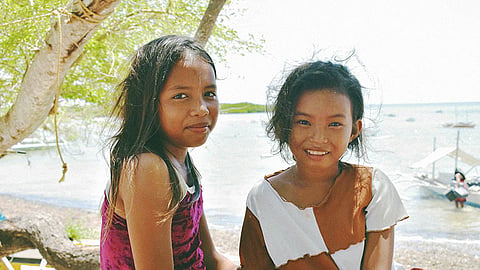

For households on Pangan-an Island, rain is more than a welcome change in the weather. It is a source of drinking water, a means of preparing meals and a necessity that determines how families get through the day.
When the rain stops, however, the struggle begins. Residents must buy drinking water, fetch it from shared wells or travel to neighboring islands to secure supplies. Each option comes at a cost, forcing families to stretch their budgets and make difficult choices between water and other necessities.

“Here in our island, we are used to drinking rain water and some residents need to adjust their bodies when they drink mineral water because they aren’t used to it,” said Remedios Babatuan, an island healthcare worker, in a 2024 interview.
For Babatuan and many others on Pangan-an, rain is not simply weather. It is a household supply that becomes increasingly uncertain during prolonged dry spells.
As another strong El Niño threatens to bring below-normal rainfall to parts of the country, the island’s experience raises a larger question: how many more communities could face the same struggle if water security is not addressed before the next dry spell?
When water becomes a luxury
Babatuan said residents turn to shared wells when stored rainwater runs low. Buying drinking water is not always affordable, especially when food prices are also high.
“There are times that the water is expensive and we don’t have any money to afford it, especially when the rice is expensive, so we use the water from the well,” she said.
Residents also use what she called “tayam-tayam,” or brackish water, for some household needs, reserving purchased water for cooking.
“While there is still no rain, we still use tayam-tayam because of how expensive water is, because mineral water is for cooking and we need to budget,” she said.
For JP Rodriguez, a volunteer who spent time with residents, getting water could also mean dealing with limited supplies at a local water center. According to her account, households were limited to purchasing two gallons daily, with supplies sometimes running out before everyone could be served.
“The water in the center gets empty fast and it can’t accommodate every resident,” Rodriguez said in an interview with SunStar.
Some residents turned to private sources, while others traveled to Olango Island or Marigondon to buy water. Rodriguez estimated that a gallon of mineral water cost around P80, with a round-trip boat fare to Olango costing another P80.
During one particularly difficult dry period, Rodriguez recounted that some residents temporarily stayed in Sta. Rosa on Olango Island after a leaking rainwater tank further reduced their stored supply and the local water center had run out.
Their experiences illustrate how water scarcity can disrupt more than household chores. It can affect whether families can afford to stay in their own homes.
An island’s warning
The concern is timely. The Philippine Atmospheric, Geophysical and Astronomical Services Administration (Pagasa) reported in October 2026 that a strong to very strong El Niño was present in the tropical Pacific, with forecasts indicating it could peak before the end of the year and persist into the first half of 2027.
The phenomenon increases the likelihood of below-normal rainfall, dry spells and drought in parts of the country. Pagasa has also warned of possible drought conditions in Cebu and Bohol by March if below-normal rainfall persists.
For island communities dependent on rainwater, these forecasts are more than seasonal updates. They are reminders of how vulnerable household supplies can become when rainfall is insufficient and alternative sources are limited.
Pangan-an’s experience raises questions about the preparedness of other island communities. Do they have enough water storage? Are alternative sources available when rainwater runs out? Can residents afford drinking water when supplies become scarce?
Efforts to improve Pangan-an’s water access have included a solar-powered desalination plant reported by SunStar in 2024. However, its long-term impact depends on continued operation, adequate production and accessibility to households.
The challenge is not simply to build more facilities, but to ensure that communities have dependable water systems before prolonged dry spells turn shortages into emergencies.
Before the rain stops
Water conservation often begins with simple habits: fixing leaking faucets, collecting rainwater where appropriate, storing drinking water properly and avoiding unnecessary consumption.
But individual efforts can only go so far. Local governments and water providers must also ensure that communities have reliable and affordable sources, especially during prolonged dry conditions.
Pangan-an’s experience is a reminder that water security should not become an afterthought when the wells run low and the rainwater containers run empty.
As El Niño approaches, perhaps it is also time to rethink the way we use water at home. Every drop we save matters, but so does ensuring that every household has access to enough of it.
After all, water is part of nearly everything we do, from preparing breakfast and doing the laundry to keeping a home comfortable. Its value becomes most apparent when there is no longer enough to go around.