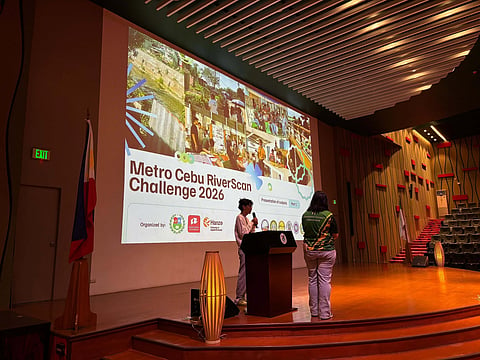


THE University of San Carlos (USC) is using its River Scan Challenge to document conditions along the Butuanon River and develop research-based proposals on water quality, flooding and waste management.
Jose Glenn Capanas, dean of School of Law and Governance, said student and faculty teams visited communities in several barangays along the river in 2023, speaking with residents about their living conditions.
“What we are presenting here shows what the Butuanon River Scan uncovered when our school went out to various barangays,” said Capanas, a lawyer.
Field visits expose river conditions
The teams, he said, saw homes along the riverbanks and observed poor water conditions.
“In those locations, you can see the real situation along the banks of the Butuanon River. There are homes and residents living right beside the river who are forced to stay there. We could actually smell the terrible odor of the river and see how murky and heavily polluted the water is,” he said.
The 2023 Metro Cebu River Scan Challenge included fieldwork along the Butuanon River, where six USC teams were assigned to study water quality, flooding and waste management issues.
Easement raises enforcement questions
The River Scan also raised concerns about structures near the river. Article 51 of Presidential Decree 1067, or the Water Code of the Philippines, provides a three-meter public-use easement along riverbanks in urban areas and prohibits people from staying in the zone longer than necessary for specified public uses or building structures of any kind.
Capanas said the findings showed a need to address structures that may have been built within the legal easement, as well as gaps in enforcement.
“We observed significant shortcomings in what we call the regulatory and legal frameworks. There are noticeable gaps in clearing the banks of the Butuanon River, alongside a clear lack of actual law enforcement on the ground,” he said.
The presence of homes along the river does not by itself establish that they violate the easement. Whether a particular structure is within the easement or violates other regulations must be determined by the appropriate government authorities.
Watershed crosses local boundaries
The Butuanon River Watershed is designated as a Water Quality Management Area (WQMA), with a governing board involving government agencies, local governments and other stakeholders. The Department of Environment and Natural Resources (DENR) 7 continues to convene the governing board for the watershed.
Capanas said the river’s problems cannot be addressed by a single barangay or city because environmental impacts can cross jurisdictional boundaries.
“We realized that this issue does not only concern the barangays or the residents living along the river, but also the university,” he said.
USC’s 2023 River Scan involved partnerships with Cebu City and Mandaue City, as well as DENR’s Environmental Management Bureau 7 and other agencies and organizations.
Research to guide future proposals
USC plans to expand its research in the next River Scan Challenge, including air quality monitoring and studies on ways to improve water quality.
“Our plans cannot rely on mere imagination or assumptions that solutions will spontaneously appear. We need an evidence-based approach, and that is where the role of the university comes in,” Capanas said.
He said USC would coordinate its research and student proposals with local governments and community partners.
“We want to give opportunities to those conducting research on the Butuanon River, including studies on air quality and methods to clean the river water, while deepening our active participation in river management.”
Capanas also called for sustained institutional and financial support from local officials, saying research findings must be matched by enforceable policies and community participation for rehabilitation efforts to last. / ABC