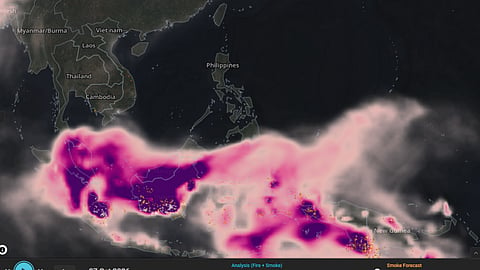


AIR quality in Metro Cebu reached the “Very Unhealthy” category Wednesday morning, October 7, 2026, with elevated fine particulate matter (PM2.5) attributed primarily to local sources rather than pollution drifting from Indonesia, according to the latest air quality status update.
As of 11 a.m., the Environmental Management Bureau (EMB) 7 reported the elevated readings of PM2.5 were driven by local emissions.
“The air quality is driven entirely by local factors—including vehicle emissions, industrial operations, and other area sources—rather than transboundary pollution. Low ambient temperature particularly during nighttime up to early morning also contributed to the suspension of fine particulate matter in air,” EMB 7 said.
The report explained that low ambient temperatures can cause “temperature trapping,” preventing PM2.5 from dispersing and allowing pollutants to remain suspended near the ground as colder air limits the rise of warmer air carrying the pollutants.
EMB 7 said there is currently no evidence that smoke or transboundary pollution from Indonesian forest fires is contributing to the poor air quality in Metro Cebu.
With the end of the southwest monsoon, or Habagat, the change in weather conditions further supports the assessment that the current deterioration in Metro Cebu’s air quality is not being caused by transboundary pollution from Indonesian wildfires, the EMB 7 report said.
The public is encouraged to wear appropriate masks, particularly N95 or KN95 masks, when exposure to outdoor air cannot be avoided.
Sensitive groups are advised to remain indoors, while anyone experiencing a medical emergency or serious symptoms should seek medical attention. (DPC)