
* The Philippines officially joined the Coalition for Disaster Resilient Infrastructure (CDRI) as its 71st member, becoming the second Southeast Asian nation after Vietnam to enter the global partnership.
* President Ferdinand Marcos Jr. announced the entry on Sept. 12, 2026, following a meeting with CDRI officials during the 18th BRICS Summit in New Delhi.
* PCO Acting Secretary Dave Gomez noted that joining grants access to technical expertise and financing, emphasizing that proactive resilience spending is more cost-effective than post-disaster recovery.
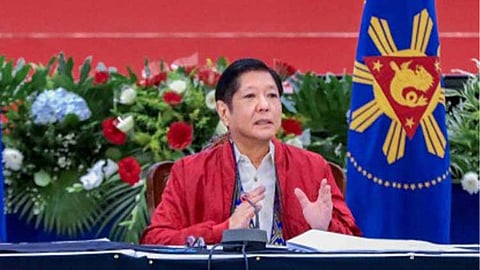
THE Philippines has officially joined the Coalition for Disaster Resilient Infrastructure (CDRI), a global partnership that helps countries strengthen infrastructure against climate and disaster risks.
President Ferdinand Marcos Jr. announced the country’s membership in a Facebook post Saturday, Sept. 12, 2026.
“The Philippines officially joins the Coalition for Disaster Resilient Infrastructure, giving us greater access to global expertise, innovative solutions and partnerships to build infrastructure that can withstand disasters and protect Filipino communities for generations to come,” he said.
“The Filipino ‘bayanihan’ (cooperation) spirit will always be our greatest strength. But resilience must also be built into the roads, bridges, communication systems and public buildings that our people depend on every day,” he added.
The President met with CDRI officials on the sidelines of the 18th Brics Summit in New Delhi, India, where the Philippines was welcomed as the coalition’s 71st member.
The Philippines is the second Southeast Asian country to join the CDRI after Vietnam.
Access to expertise
Presidential Communications Office (PCO) Acting Secretary Dave Gomez said membership would allow the Philippines to draw on the experiences, technical expertise and best practices of other members in developing disaster-resilient infrastructure.
Gomez, who joined Marcos during the meeting, said the Philippines could also gain access to financing for projects designed to strengthen infrastructure against climate and disaster risks.
“So, it’s a very big thing to be part of this Coalition,” Gomez said, stressing that investing in resilient infrastructure before disasters strike is more cost-effective than spending heavily on reconstruction and recovery after calamities.
CDRI director general Amit Prothi welcomed the Philippines to the coalition.
“I’m really looking forward to working with the Philippine institutions on disaster-resilient infrastructure and I’m very happy that they’ve decided to join the coalition,” Prothi said.
Development plans
The Philippines’ membership forms part of the Philippines-India Strategic Partnership and supports the Philippine Development Plan 2023-2028, National Adaptation Plan 2023-2050 and National Disaster Risk Reduction and Management Plan 2020-2030.
The PCO said the Department of Public Works and Highways has been designated to represent the Philippines in the CDRI.
Also present during Marcos’ meeting with CDRI officials were Foreign Affairs Secretary Ma. Theresa Lazaro, Finance Secretary Frederick Go, Transportation Secretary Giovanni Lopez and Philippine Ambassador to India Josel Ignacio.
Global coalition
India launched the CDRI in 2019 as a voluntary and non-binding global partnership focused on strengthening infrastructure against disasters and climate change.
Members have access to global expertise, funding, technical support, research opportunities, new solutions and international best practices.
The coalition seeks to make US$10 trillion in new and existing infrastructure investments and services resilient to natural hazards and climate change through stronger capacity, informed policy, planning and management.
It aims to improve environmental quality, livelihoods and well-being for more than three billion people worldwide.
The multi-stakeholder coalition is primarily supported by voluntary contributions from member countries and organizations, including the United States, United Kingdom, European Union, Australia, Canada, France, Germany, India, Japan, the Netherlands and the World Bank. / PNA
