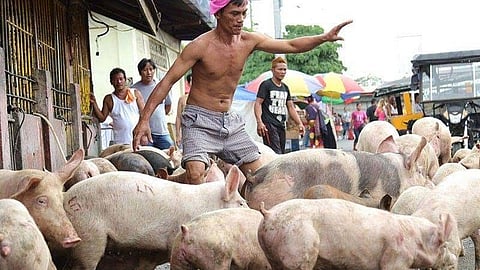


THE Department of Agriculture (DA) is pushing for higher tariffs on imported pork as local hog raisers face falling farmgate prices despite a recovery in domestic production, raising concerns over the viability of the local swine industry.
In a statement, Agriculture Secretary Francisco P. Tiu Laurel, Jr. said the DA has proposed gradually restoring pork tariffs to pre-African swine fever levels as imports and inventories rise alongside the recovery in local hog production.
Under the proposal, tariffs would increase by 10 percentage points in 2027, bringing rates to 25 percent for in-quota imports and 35 percent for out-quota shipments from the current 15 percent and 25 percent, respectively.
The rates would rise further to 30 percent in-quota and 40 percent out-quota in 2028, Tiu Laurel said after meeting with hog industry leaders.
The proposed tariff adjustments come as local pork supply improves but farmgate prices continue to decline.
“Local hog production increased by six percent in the first semester of 2026, while pork imports and inventories have reached high levels,” Tiu Laurel said.
Farmgate prices fell to P150 per kilogram in August 2026 from P215 per kilogram in June 2025, according to the DA. The decline has squeezed raisers’ margins and could make it more difficult for them to rebuild their herds.
The agriculture chief said he had discussed with President Ferdinand R. Marcos, Jr. the proposed restoration of pork tariffs.
Industry groups also called for additional measures to protect local producers, including time-bound quantitative restrictions on imports, local shipping permits and testing for imported frozen meat.
They also sought tighter scrutiny of shipments declared under lower tariff categories and an updated reference value for imported meat to address possible undervaluation.
The DA is separately seeking a dedicated tariff line for frozen pork jowls, which it said have become a major import item because of their lower tariff treatment and are increasingly competing with locally produced pork in retail and food service markets.
Tiu Laurel also rejected further tariff reductions on imported meat and corn, saying short-term efforts to lower food prices should be balanced against the need to maintain the viability of domestic livestock production.
Meanwhile, industry representatives asked the DA and the Development Bank of the Philippines to support financing that would allow them to access a US Department of Agriculture facility for importing feed raw materials, including corn, wheat and soybeans. / KOC