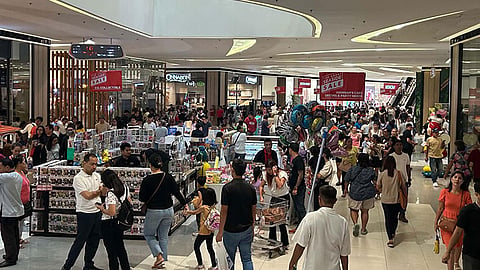


CEBU retailers are tempering expectations for the Christmas shopping season as the peso’s depreciation against the US dollar and high borrowing costs threaten to raise prices and constrain consumer spending.
Robert Go, a retailer and spokesperson of the Philippine Retailers Association-Cebu, said retailers are less optimistic about the holiday season and are scaling back preparations amid rising costs and elevated interest rates.
“The weakening of the peso versus the dollar is a very disturbing phenomenon,” Go said, warning that the currency’s depreciation could push up prices of imported goods and other products that rely on imported raw materials.
The Philippines’ dependence on imports, particularly for oil, rice, food ingredients and packaging materials, means a weaker peso could increase costs across several consumer goods categories, he said.
Even products manufactured locally may become more expensive when their raw materials or packaging are sourced abroad, Go added.
The higher costs could weigh on household budgets during the Christmas season, when consumers typically increase spending on food, gifts and other holiday essentials.
“Our ‘Merry Christmas’ will result in not so merry since Noche Buena will be lacking if money is scarce,” he said.
Go said retailers traditionally prepare for the holiday shopping peak by offering discounts and conducting marketing campaigns, including promotions aimed at corporate buyers to encourage bulk purchases.
However, retailers are now taking a more cautious
approach to inventory and seasonal spending, he said.
“Our expectations are not so optimistic and our preparation has to cut back a bit since banks increase 50 basis points and very high interest rate and cannot stack up too much,” he said.
Higher borrowing costs make it more expensive for retailers to finance inventory, while stocking too much merchandise carries risks if consumer demand falls short of expectations.
Retailers must therefore balance the need to offer competitive promotions during the peak
shopping season against the cost of holding inventory and the uncertainty surrounding consumer spending.
The peso’s weakness adds to these pressures by increasing the peso cost of imported merchandise and inputs, potentially forcing businesses to raise prices or absorb part of the increase through lower margins.
For consumers, the combination of higher prices and limited purchasing power could make holiday spending more restrained this year, even as retailers seek to stimulate demand through discounts and promotions. / KOC