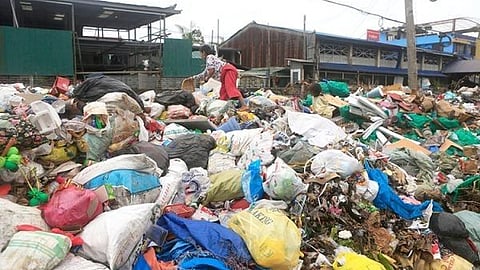


Suki Trading Corp. admitted failing to inform Vice Mayor Tomas Osmeña that it revised its proposed Cebu City garbage-processing project from P250 million to P470 million.
Company consultant Ramon Distajo cited added automatic segregation machines for the price hike, while Osmeña questioned the P220 million increase and recommended splitting future public biddings.
City councilors, officials, and Environmental Management Bureau representatives questioned the project's practical capacity, financial viability, potential environmental compliance issues, and lack of technical validation documents.
SUKI Trading Corp. admitted it failed to inform Vice Mayor Tomas Osmeña that it had revised its proposed garbage-processing project for Cebu City, raising the price from P250 million to P470 million.
The admission came during an executive session of the City Council, where company representatives were questioned on the revised proposal, its technical capacity and its environmental compliance.
Ramon Distajo, Suki’s consultant, said the revised package includes two pyrolysis machines, two automatic segregation machines and accessories, and the building to house them. The segregation equipment accounts for P220 million of the total. The original offer covered only two pyrolysis machines at P125 million each.
Change in configuration
Distajo said the company changed the configuration after concluding that manual segregation would not be practical for the city’s volume of mixed waste. He claimed the mayor’s office agreed to the change because the company submitted a letter that was later endorsed to the council.
Councilor Joel Garganera challenged this, noting that Mayor Nestor Archival earlier said the proposal did not come from his office and that he was unaware of the transaction. Asked whether there were direct talks on the added equipment, Distajo only repeated that a letter was submitted.
Project scrutiny
Kenneth Siasar, Archival’s chief of staff, said he was not privy to the negotiations and could not confirm the amount or details. He said the mayor wanted the council to scrutinize the technology before the administration decides.
Siasar said Archival would consider proposals that cut waste and speed up garbage collection, if they pass due diligence and deliver results in a practical timeframe.
Osmeña questioned the need for the additional P220 million, saying barangays are supposed to segregate waste and that the city already has a segregation machine donated by the Japan International Cooperation Agency. The machine remains operational, though a court order involving its site restricts its use.
He also cited records for a proposed Land Bank financing arrangement that listed a P70-million building and P40 million in other costs, for a total of P360 million, and asked how the offer reached P470 million. Distajo explained that the P470-million figure includes the building, which the supplier would shoulder.
Split bidding
Osmeña recommended that any public bidding be split into components, namely segregation equipment, site preparation and installation of the processing machinery, so the City can compare offers. He stressed that procurement would still go through public bidding.
Suki president and CEO Victoriano Ocon presented an integrated hub that he said can process 600 to 700 metric tons of waste daily, with the segregation system running about 20 hours a day. He said it would cut landfill waste and tipping fees and could earn returns from recyclables and plastic credits.
Councilors questioned the actual capacity, the handling of residual waste and whether the benefits could be shown under Cebu City conditions. Councilor Harry Eran said the project would not fully solve the problem if leftover waste still had to go to disposal facilities.
A representative of the Environmental Management Bureau 7 said the facility would need air pollution control devices, wastewater treatment and an environmental compliance certificate.
Lawrence Jun Yurong of the bureau’s Solid Waste Management Section said the EMB had not yet received technical validation documents for the technology. He said pyrolysis differs from incineration because it works at high temperatures with limited oxygen and no direct flame, but must still meet emission standards.
Councilors said the City must move quickly but should not commit to equipment before its technical and financial viability is established. Eran urged the mayor and vice mayor to coordinate closely, warning that delays could strain city finances.
Osmeña said the session was meant to help council members understand the technology, not to make a procurement decision. / CAV