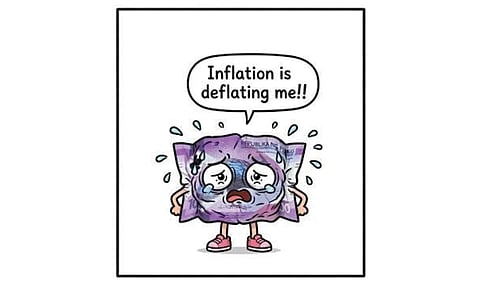


Philippine Statistics Authority 7 officer-in-charge Wilma Perante stated on Tuesday, Sept. 15, 2026, that a P100 budget in Central Visayas could only buy about what P75 bought in 2018.
Central Visayas' regional inflation eased to 8.1 percent in August 2026 from 8.7 percent in July, but remained higher than the national rate of 6.1 percent.
Food and nonalcoholic beverages drove the slowdown by easing to 8.5 percent in August, though they remained the largest contributor to regional inflation at 3.42 percentage points.
A P100 budget in Central Visayas in August 2026 could buy only about what P75 bought in 2018, showing how years of rising prices have reduced the peso’s purchasing power.
Regional inflation eased to 8.1 percent in August but remained above the national rate of 6.1 percent, according to the Philippine Statistics Authority (PSA).
Speaking at a press conference on Tuesday, Sept. 15, 2026, PSA 7 officer-in-charge Wilma Perante said an unchanged P100 budget could no longer cover the same basket of goods and services it bought in 2018.
Shrinking buying power of P100
Purchasing power measures how much money can buy, with P100 in Central Visayas worth about P75 in 2018 prices, compared with about P73 nationally.
Perante said households with unchanged incomes must either spend more to maintain their consumption or keep the same budget and buy less.
“Maintaining the same basket of goods and services, what would be the effect? You will add more pesos because you are buying the same goods and services,” Perante said in a mix of Filipino and English.
These expenses include food, transportation, electricity, water and personal services.
Price benchmark
PSA uses 2018 as the base year for the Consumer Price Index (CPI), which tracks changes in the average prices of a fixed basket of household goods and services.
The index starts at 100 in the base year, while Central Visayas’ August 2026 CPI of 133.9 means a basket that cost P100 in 2018 would cost P133.90 — a cumulative increase of 33.9 percent.
This comparison measures price changes since 2018, while August’s annual inflation rate compares prices with August 2025.
Slower inflation and household costs
Central Visayas’ inflation rate fell to 8.1 percent in August from 8.7 percent in July but remained above the three percent recorded in August 2025.
The slowdown means prices rose at a slower annual pace, with average consumer prices still 8.1 percent higher than a year earlier.
Perante said the region’s higher inflation compared with the national rate does not establish that it has the country’s highest prices.
Households can therefore remain under financial pressure despite easing inflation, especially when their incomes fail to keep pace with rising costs.
Main sources of price pressure
Food and nonalcoholic beverages drove the slowdown as their inflation rate eased to 8.5 percent in August from 10.7 percent in July.
Inflation for restaurants and accommodation services also declined to 10.3 percent from 11.1 percent.
Despite the easing, food and nonalcoholic beverages remained the largest contributor to regional inflation, accounting for 3.42 percentage points of the overall 8.1 percent rate.
Cereals and cereal products posted an annual price increase of 11.2 percent, while fish and other seafood prices rose by 13.6 percent.
Vegetables, tubers, plantains, cooking bananas and pulses recorded a 19 percent increase, showing why household food budgets remain strained even as inflation slows. / DPC