

Cebu City councilors questioned a proposed P7-million refrigerated van for the City Agriculture Department, urging the City to prioritize water supply and irrigation for upland farmers over post-harvest vehicles.
Vice Mayor Tomas Osmeña and Councilor Pastor Alcover Jr. advocated for water impounding facilities and acquiring two dedicated water tankers to support agricultural production during dry periods.
The City Council deferred the van purchase, requiring CAD to submit an El Niño response plan, a cost-benefit assessment, and details on existing post-harvest facilities before reconsidering the project.
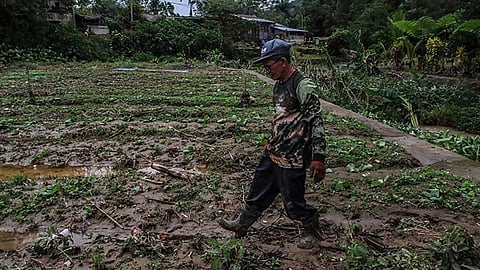
WATER for upland farmers should come before a P7 million refrigerated van, Cebu City councilors said, warning there may be little produce to keep cold if the El Niño phenomenon reduces water supply and crop yields.
The City Council approved a motion asking Mayor Nestor Archival to create a special body to study water supply for farmers, following a debate on whether the City should put water access ahead of the proposed van for agricultural produce.
Councilors said the City needs to identify alternative water sources and develop impounding facilities. They also called for water tankers, so farmers can keep producing when rain is scarce.
Vice Mayor Tomas Osmeña, for his part, said the lack of irrigation leaves farmers dependent on rainfall, often forcing them to plant and harvest at the same time. Prices may drop when vegetables reach the market simultaneously because of oversupply, reducing farmers’ earnings.
Osmeña proposed forming a team to identify potential water sources and determine which projects could address the needs of upland communities.
Water tankers
Councilor Pastor “Jun” Alcover Jr. also questioned why the City had not prioritized water tankers, saying it sometimes had to borrow units that were also needed by fire responders.
He proposed acquiring two tankers to serve northern and southern Cebu City.
“What is the use of a refrigerated van if there is insufficient agricultural production?” he said.
Deferred purchase
The debate stemmed from a proposal to buy a refrigerated van for the City Agriculture Department (CAD). The council’s committee on agriculture and rural development recommended deferring the purchase until the department submits additional supporting documents.
The committee cited the lack of an El Niño preparedness and response plan and too little justification for buying the vehicle right away.
Councilor Harry Eran said the City should reassess its spending priorities based on farmers’ immediate needs, adding that an approved budget allocation does not automatically require the City to proceed with a project.
He cited the City’s 2025 realignment of P1.2 billion from the Local Development Fund to other needs. These included improvements at the Cebu City Medical Center and assistance for senior citizens, as well as land acquisition for informal settlers.
Councilor Alvin Arcilla, sponsor of the resolution authorizing the van purchase, questioned the need for further justification because the P7 million allocation had already been approved under the City’s 2026 Local Development Fund.
The resolution authorizes the use of the amount to buy one refrigerated van for CAD.
Existing facilities
Councilors also questioned whether the City was making full use of existing post-harvest facilities before acquiring another refrigerated vehicle.
Councilor Phillip Zafra asked about the proposed van’s capacity and location, and how many farmers’ associations would benefit. He also asked about two refrigerated vans reportedly included in the Bagsakan Center project at the South Road Properties.
The council then discussed calling CAD officials to clarify the status and intended use of those units.
Zafra said farmers need better post-harvest facilities, adding that some are forced to sell their produce quickly because they lack suitable storage.
Osmeña also questioned whether a refrigerated van was the most effective way to preserve vegetables, suggesting that some produce could be cooled in ice water right after harvest.
What CAD must submit
Under the committee’s recommendation, CAD must submit a utilization plan identifying the van’s beneficiaries, service areas and frequency of use, as well as its projected operating and maintenance costs.
It must also submit a cost-benefit assessment and a status report on pending agricultural projects, and assess its existing vehicles and facilities, before the purchase can be reconsidered. / CAV