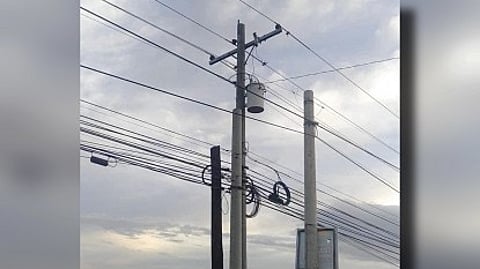


Visayan Electric Company Inc. representatives explained to Cebu City councilors during an executive session called by Councilor Pancrasio Esparis that power supply constraints, higher WESM prices, and household consumption keep monthly bills high despite rotational brownouts.
Visayan Electric official Erik Monsanto stated that the utility deferred some charges to prevent rates from reaching about P21 per kilowatt-hour, keeping current charges at approximately P14.89 per kilowatt-hour.
Department of Energy official Keelvin Dajao reported that the Visayas grid is not expected to experience yellow or red alerts through December 2026, provided major power plants stay online without new forced outages.
VISAYAN Electric Company Inc. told Cebu City councilors that power supply constraints, higher electricity prices in the wholesale market and household consumption can keep monthly bills high even as the city goes through rotational brownouts.
The Department of Energy (DOE) told the same executive session that the Visayas grid is not expected to see yellow or red alerts through December, provided major power plants stay online and no new forced outages occur.
Erik Monsanto of Visayan Electric’s Marketing and Communications Department addressed complaints about high bills during an executive session, where he explained why consumers could still see higher charges despite repeated power interruptions. The session was called by Councilor Pancrasio Esparis.
Supply and price
One major factor, Monsanto said, is the supply deficit that has affected the power system.
“Kon mubo ang supply, taas ang demand, mosaka gyud ang presyo,” he said.
(If supply is short and demand is high, prices will surely go up.)
He said power plant outages can force distribution utilities to obtain electricity from more expensive sources to maintain supply rather than leave customers without power. When contracted generators cannot provide the required electricity, Visayan Electric may turn to the Wholesale Electricity Spot Market (WESM), where electricity is bought and sold as a commodity.
Deferred charges
Monsanto said Visayan Electric does not simply pass on higher generation costs to consumers. It has also deferred some charges to prevent a sharper increase in monthly bills.
He said the electricity rate, if the deferred charges had been fully reflected, could have reached around P21 per kilowatt-hour (kWh), compared with the approximately P14.89 per kWh being charged.
Monsanto explained that Visayan Electric’s supply is not entirely sourced from WESM. About 40 percent comes from the spot market, which was subject to a 50 percent discount under the secondary price cap.
He said the difference between the actual costs incurred and the amount immediately charged to consumers was deferred and will be recovered later. Visayan Electric had asked the Energy Regulatory Commission (ERC) to allow the deferral of the charges.
Household usage
Monsanto said household electricity consumption is another factor.
To illustrate, he used an air conditioner as an example. A 1,200-watt, or 1.2-kilowatt, unit operating for 10 hours consumes 12 kWh. At P14.89 per kWh, that amounts to P178.68 per day, or about P5,360.40 over 30 days for the air conditioner alone.
He said consumers may also underestimate how their usage changes when they try to save electricity. For instance, a household may consolidate family members into one room and use only one air conditioner instead of several units. But putting more people into the same room can make the unit work harder to maintain the desired temperature, potentially increasing its consumption.
Monsanto cited the age and condition of appliances. Older air conditioners and other appliances may consume more electricity as their efficiency declines over time, he said, comparing this to vehicles, which generally have better fuel efficiency when new than after several years of use.
Where the money goes
Monsanto said Visayan Electric does not retain the entire amount consumers pay on their electricity bills.
Based on the sample bill presented during the session, 60.32 percent goes to generation, 5.89 percent to transmission, 19.88 percent to Visayan Electric for distribution, and 13.91 percent to government charges, taxes and subsidies.
He said Visayan Electric cannot raise its distribution charge on its own because the ERC must approve it. The distribution utility’s role includes delivering electricity from the national grid to households, as well as metering and collection. It also maintains its distribution lines, substations, service centers and other facilities.
Monsanto said Visayan Electric is a highly regulated entity under the Electric Power Industry Reform Act.
Rotational brownouts
Monsanto said Visayan Electric does not independently impose rotational brownouts. The company receives instructions from the National Grid Corp. of the Philippines (NGCP) when manual load dropping, or the deliberate cutting of power to some areas, is required because of conditions in the transmission and generation system.
He distinguished brownouts from scheduled maintenance and emergency outages. Scheduled outages are planned for activities such as transformer replacement, line upgrades and vegetation trimming, while emergency outages can result from sudden equipment failures, vehicle accidents involving power facilities or trees falling on power lines.
He said the current power shortage is largely an upstream problem involving the generation and transmission sectors.
DOE outlook
Before Visayan Electric’s presentation, DOE official Keelvin Dajao briefed the council on the country’s power situation.
Dajao said the Visayas grid is projected to have normal operations in the fourth quarter of 2026, with no yellow or red alerts expected, provided major baseload power plants remain online and no new forced outages occur.
He said the grid had already reached its projected peak demand for the year in May 2026 and was not expected to exceed that level.
Dajao said the remaining major baseload plant on forced outage was PEDC Unit 3 in Iloilo, which was expected to return to service in the last week of October. He also cited about 253 megawatts of additional ancillary services expected to become available in the Visayas in the fourth quarter, mostly from battery energy storage systems.
He cautioned, however, that yellow or red alerts could still occur if major baseload capacities unexpectedly go offline.
Interruptible load program
As a short-term measure, Monsanto urged the City Council to help encourage more businesses to join Visayan Electric’s Interruptible Load Program.
Under the program, participating large businesses temporarily reduce their electricity consumption from the grid during yellow or red alerts, when the grid’s reserves are thin or have run out, by operating their own generators or voluntarily dropping their load. Visayan Electric compensates them for additional fuel costs incurred from running their generators, based on the difference between their normal consumption and reduced grid consumption.
Monsanto said the program allows electricity that would otherwise be consumed by large establishments to remain available for households.
Among the participants are SM malls, Metro, Taiheiyo and Apple Cement, while Ayala has been voluntarily reducing its load during yellow alerts without compensation. He said Visayan Electric is still looking for more participants. / CAV