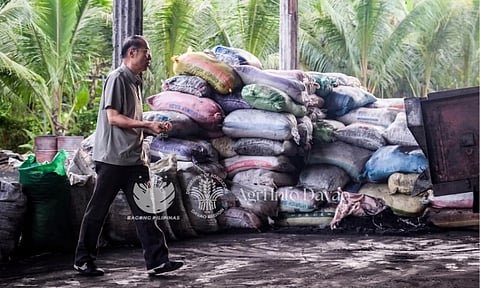


A PROPOSED Malaysian-Chinese investment in coconut shell processing could open another market for coconut farmers in the Davao Region, as the industry continues to explore ways to turn agricultural by-products into higher-value commodities.
The Department of Agriculture-Davao Region (DA-Davao), together with representatives of China's Tianjin Tianchang Company and Malaysia-based Borneo New Energy Holding Berhad, recently inspected six potential locations in Davao del Norte for a proposed warehouse and processing facility.
The ocular inspection, facilitated by DA-Davao through its Agribusiness and Marketing Assistance Division (AMAD), followed initial discussions on developing a market for coconut shells, which can be processed into industrial products.
DA-Davao Regional Technical Director for Operations Marie Ann M. Constantino said the proposed investment could provide coconut-producing communities with an additional market outlet.
“Through the establishment of a processing facility in the region, coconut-producing communities may gain access to another market outlet, allowing farmers and their organizations to maximize the value of their harvests and generate supplementary income,” Constantino said.
The proposed joint venture intends to process approximately 20,000 metric tons of coconut shells annually into coconut shell activated carbon, coconut shell charcoal, shisha charcoal, honeycomb activated carbon blocks and other related products.
Anflo Industrial Estate emerged as one of the prospective locations. The investors also held discussions with estate representatives and the Philippine Economic Zone Authority (Peza) regarding possible development arrangements, industrial requirements and agreements.
However, the proposed facility remains under evaluation, with further consultations needed before the investment can proceed.
Kiing Teck Wee of Borneo New Energy Holding Berhad thanked DA-11 for facilitating the engagement and expressed the company's commitment to continuing discussions on opportunities that could benefit investors and local coconut farmers.
The investment comes as the Davao Region maintains its position as a major coconut-producing area in the country.
According to the Philippine Statistics Authority (PSA), the region produced nearly 1.97 million metric tons of coconuts in 2024, accounting for 87.2 percent of its total non-food and industrial crop production.
Despite its production capacity, the industry continues to face structural challenges.
DA-11 Regional Director Macario Gonzaga previously identified low farmgate prices, aging coconut trees, climate change, pests, diseases and limited post-harvest access as concerns affecting farmers.
“Despite these achievements, our farmers face serious challenges—low prices, aging trees, climate change, pests, diseases, and limited post-harvest access,” Gonzaga said in October 2025.
The Department of Trade and Industry-Davao Region (DTI-Davao) has also been working to expand the market for coconut-based products, including processed goods and by-products.
DTI-Davao Director Romeo Castañaga earlier cited low farmer income, poor tree productivity, outdated technologies and limited market utilization as challenges confronting the industry.
Castañaga said the agency's partnership with PUM Netherlands aimed to develop coconut husk-based products, particularly substrates and growing media that have demand in European markets.
The latest investment exploration builds on discussions initiated during the Sabah International Expo 2026.
DA-Davao said it would continue coordinating with investors and relevant government agencies to strengthen agricultural value chains, attract investments and expand livelihood opportunities for coconut-producing communities.
DA also said that the proposed facility, once realized, could provide another avenue for utilizing coconut resources beyond traditional products, although its actual benefits to farmers will depend on the eventual procurement arrangements and market prices. DEF
