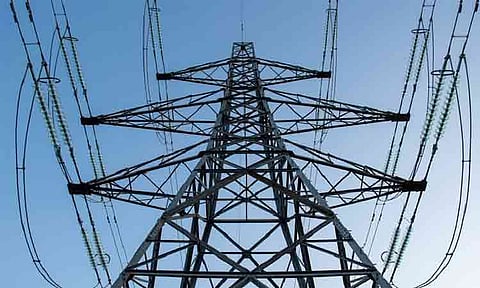


THE Department of Energy (DOE) said Mindanao’s power grid has returned to normal operating conditions as major power plants undergo scheduled maintenance and previously forced-out units return to service.
During a media briefing on Sept. 16 at The Royal Mandaya Hotel in Davao City, Darwin Galang, chief of the DOE Mindanao Field Office Electric Power Industry Management Division, assured the public that the region has enough power supply.
“At present, the Mindanao grid is under normal conditions, normal operations,” Galang said, noting that peak demand on Sept. 15 reached 2,464 megawatts (MW), against an available capacity of 2,807 MW.
The improved outlook follows a period of tight reserves earlier this month. National Grid Corp. of the Philippines (NGCP) data showed the Mindanao grid posted negative gross reserves of 109 MW on Sept. 8 and 46 MW on Sept. 11, following red and yellow alerts earlier in September.
Available capacity fell to 841.6 MW during the alerts because of forced outages at several power plants.
The grid recovered sharply on Sept. 13, when gross reserves reached 545 MW, a significant improvement from the year-to-date peak demand of 2,775 MW recorded May 12, when the grid was first placed under severe alerts.
Galang said the thinning reserves from Aug. 10 to Sept. 12 resulted from forced outages at four major generating plants, compounded by scheduled preventive maintenance from August through October.
Key generating units, including GNPK Unit 3 and TMI Unit 2, returned to service on Sept. 13 and 14, helping stabilize the grid.
“As the days progress, naga-improve atong power situation and nagadako atong margin of reserve sa atong Mindanao grid (As the days progress, our power situation is improving and the reserve margin of the Mindanao grid is increasing),” Galang said.
Most of the remaining plants under maintenance are expected to return online between late September and early October. Galang said less than 200 MW of capacity is expected to remain offline beyond that period.
Consumers urged to save power
Despite the improved supply outlook, Galang urged consumers to use electricity efficiently, particularly during peak demand periods from 1:30 to 3 p.m. and 6 to 7 p.m.
“If we trim down our demand, naay mga posibilidad na dili makadagan tong mga mas mahal na planta (If we trim down our demand, there is a possibility that the more expensive plants will not need to run),” he said.
Reducing demand during peak periods can help limit the need to operate more expensive peaking power plants, Galang said.
He also urged consumers to report illegal connections and line hazards to their local distribution utilities, including Davao Light and Power Co., to help reduce system losses and prevent outages caused by line-to-ground faults.
DOE and Energy Regulatory Commission joint inspection teams are also conducting physical inspections of power plants across Mindanao. The teams are checking technical outage reports and determining whether regulatory action is needed.
Grid simulations indicate no yellow or red alerts are projected for the rest of 2026, with a stable supply outlook extending into 2027, assuming no further unplanned outages. GRS
