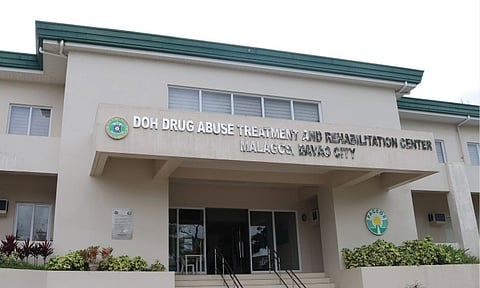


THE Department of Health (DOH) drug rehabilitation center in Barangay Malagos, Davao City, has recorded 601 admissions since it opened in 2021 and has doubled its capacity to 150 beds, an official said.
Karl Anthony Ebol, officer-in-charge of the center's Outpatient and Aftercare Division, spoke during the DOH media engagement in Davao City on Friday, Oct. 30, 2026, ahead of Drug Abuse Prevention and Control Week.
"Since we started our operations way back in 2021, we have already recorded 601 admissions sa ating Drug Abuse Treatment and Rehabilitation Center (at our Drug Abuse Treatment and Rehabilitation Center)," Ebol said.
He said the center serves the entire Davao Region, and most admitted patients are now in aftercare, while some have finished the program.
The center began with around 75 beds in 2021 and has tried to add capacity every year. Ebol said the beds are for residential patients, while outpatient and aftercare services have no limit.
"So, right now we are at 150-bed capacity," he said.
The center started its outpatient program this year and already has around 267 clients across the region, he said. It also has around 487 aftercare clients.
Aftercare clients attend regular monthly sessions on relapse prevention and undergo random drug testing, while the center also coordinates with their employers and brings their families into psychoeducation sessions, he said.
"Kay at the end of the day, kinsa man mosalo sa atong mga patients, sa mga clients sa ila mang family (Because at the end of the day, who will catch our patients and clients? It is their families)," he said.
Ebol said around 80 aftercare clients will graduate on Nov. 19 at the Malagos facility as part of the week's observance, and will remain coordinated with their barangay and city or municipal anti-drug abuse councils once they return to their communities.
He said a person does not go to rehabilitation after simply trying drugs once or twice, as screening and examination come first.
"It has to be a DOH-accredited doctor who will diagnose the substance use disorder," he said.
The center admits severe cases, while moderate cases go to its outpatient program, and most cases are mild and handled by community-based programs, Ebol said.
Those programs also refer to the center clients who need more than community-based care, he said, including through the Davao City Anti-Drug Abuse Council (Cadac).
"Nire-report nila sa amoa ang mga patients nila, ang mga clients nila, na kinahanglan na po og higher level of treatment (They report to us their patients, their clients, who already need a higher level of treatment)," he said.
Treatment at DOH-run centers is free, from primary treatment through aftercare, for those who cannot afford private facilities, he said.
"You can avail of the treatment and rehabilitation services of government for free," the official said.
Ebol cautioned that the center's numbers cover only those who sought professional help and do not represent the region as a whole. He said more people coming forward is still a good sign.
"It means that we are slowly fighting stigma and discrimination," he said.
Apart from the Malagos center, which is run by the DOH, the region's government rehabilitation centers include one in Bago Oshiro under the Davao City Government and one in New Corella under the Davao del Norte Provincial Government, he said. Private centers accredited by the DOH also operate in the region.
In Davao City, 7,400 clients are enrolled in Tabangan Atong Reformists Aron Naay Asenso (Tara Na), Cadac's community-based rehabilitation and aftercare program, according to Cadac.
"Dili kaya sa DOH na DOH lang (The DOH cannot do this alone)," Ebol said. GRS
