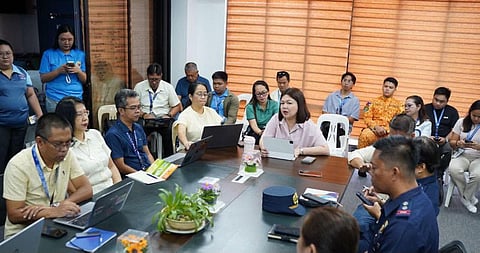


ILOILO City Mayor Raisa Treñas convened an emergency meeting of the Crisis Management Council to prepare Iloilo City for the possible effects of a strong to very strong El Niño on water and electricity supplies, food security, public health and the local economy on October 8, 2026.
“Indi na pwede nga response na lang ang aton. We have to prepare. Dapat preparahan gid naton para kun anuman ang epekto sang El Niño ang aton maatubang, ready kita,” Treñas said.
(We can't just have a response. We have to prepare. We must be prepared so that whatever the impact of El Niño we face, we are ready.)
The emergency meeting followed the presentation of data from a scientific forum held last week, which indicated that El Niño could have severe effects on the city.
Treñas directed concerned city government offices and response clusters to develop contingency measures based on three scenarios presented by the City Disaster Risk Reduction and Management Office (CDRRMO).
According to the assessment, the effects of El Niño could last until December, while the worst-case scenario projects that conditions could persist until June next year.
The Maasin Watershed and Jalaur River, both important water sources for Iloilo, could also be affected.
City officials clarified that the scenarios are projections and may change depending on actual conditions and official weather advisories.
“Sa data nga ginpakita sa aton, indi lang siya problem sang water, problem pa siya sang energy. Ang aton health affected, ang aton food affected, ang trabaho kag pati peace and order,” Treñas said.
(From the data shown to us, it's not just a water problem, it's an energy problem. Our health is affected, our food is affected, work and even peace and order.)
The mayor ordered 10 response clusters to prepare contingency plans covering administrative support, logistics, food security, local price monitoring, public information and advocacy, critical infrastructure, law and order, health security, fleet management and energy conservation.
Among the priorities are identifying high-risk barangays, monitoring water sources, coordinating with water providers and power utilities, preparing health facilities and implementing water conservation measures.
The city government is also preparing for the possible effects of extreme heat and water shortages on schools, outdoor workers and vulnerable sectors.
Treñas emphasized that each response cluster must have clearly defined responsibilities and contingency measures before conditions worsen.
She said the city should adopt the same approach used during the energy crisis, when concerned offices were assigned specific responsibilities to address the situation.
The preparations are intended to ensure that government offices and response teams can implement appropriate measures based on the severity and duration of the projected El Niño conditions.
The Iloilo City Government will continue coordinating with the Philippine Atmospheric, Geophysical and Astronomical Services Administration (Pagasa), scientific experts, water providers and other concerned agencies to monitor developments and update its contingency plans.
The city government will also continue assessing possible threats to essential services, particularly water and electricity supplies, as part of its preparedness measures.
The contingency planning aims to address potential disruptions affecting households, businesses, schools, health facilities and other sectors that depend on reliable water and power supplies.
The three scenarios presented by the CDRRMO will serve as the basis for the response clusters' preparations as the city monitors weather conditions and developments related to El Niño. (Leo Solinap/SunStar Philippines)