
Transmission rates in the country generally went down for the August 2026 billing period due partly to the drop in ancillary rates, an official of the National Grid Corp. of the Philippines (NGCP) said Thursday.
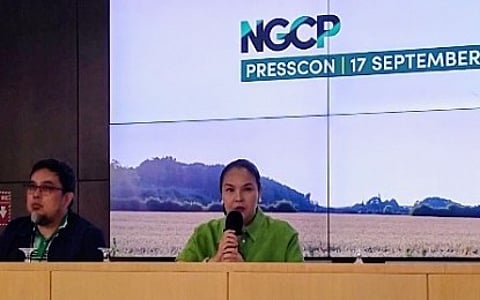
In a briefing in San Juan City, NGCP Revenue Management and Business and Regulatory Development head Julius Ryan Datingaling said transmission rates declined by PHP1.5225 per kilowatt-hour (kWh), largely due to the 13.3 percent drop in the overall transmission rate, or by PHP0.2335/kWh.
Ancillary service rate is down by PHP0.2329/kWh, and other charges by PHP0.0224/kWh.
Grid capacity
During the same briefing, NGCP spokesperson lawyer Cynthia Alabanza expressed hope that power plants experiencing forced outages would continue to resume operations to boost capacity and eliminate alerts.
The grid operator, during the day, reported a respite in red alerts for the Visayas, with only a yellow alert from 5 p.m. to 7 p.m., due partly to the resumption of Therma Visayas, Inc. Unit 2’s operation.
“Kung wala nang karagdagang plantang pumalya, kung hindi biglaang sumirit ang konsumo at matuloy na bumalik yung mga plantang kasalukuyang nakatirik, tuloy-tuloy na dapat ito hanggang sa katapusan ng taon (If no additional power plants fail, if demand does not spike, and plants currently on forced outage continue to resume operations, the situation should steadily improve until the end of the year),” she said.
NGCP data show that 40 red alerts were recorded in the Visayas this year alone due to supply issues, while eight were logged in Mindanao and none for Luzon.
Also, 105 yellow alerts were recorded in the Visayas, 18 in Mindanao, and one in Luzon.
In 2025, there were no reported red alerts in any of the grids, but seven yellow alerts were registered in the Visayas, and one each in Luzon and Mindanao.
The NGCP raises a yellow alert when a grid’s capacity is short of the contingency requirement, while a red alert is issued when supply is not enough to meet both the demand and regulatory requirements.
It has been directed by the Department of Energy (DOE) to utilize ancillary services, such as battery facilities, to boost supply, especially during peak hours.
Alabanza said they have tapped several players accredited by the DOE, and the equipment is already being assessed and tested.
Asked when these facilities will be utilized, she said this depends on the results of the testing and approval by the Energy Regulatory Commission.
Alabanza said the grid alerts should be addressed holistically, noting that the current low capacity is not due to transmission issues.
She said NGCP facilities only work with whatever supply is available, hence, the need to look into the energy mix and sources and the capacity of the distribution system.
“You don’t put your eggs in one basket. So, there is no single solution to this,” she added. (PNA)
